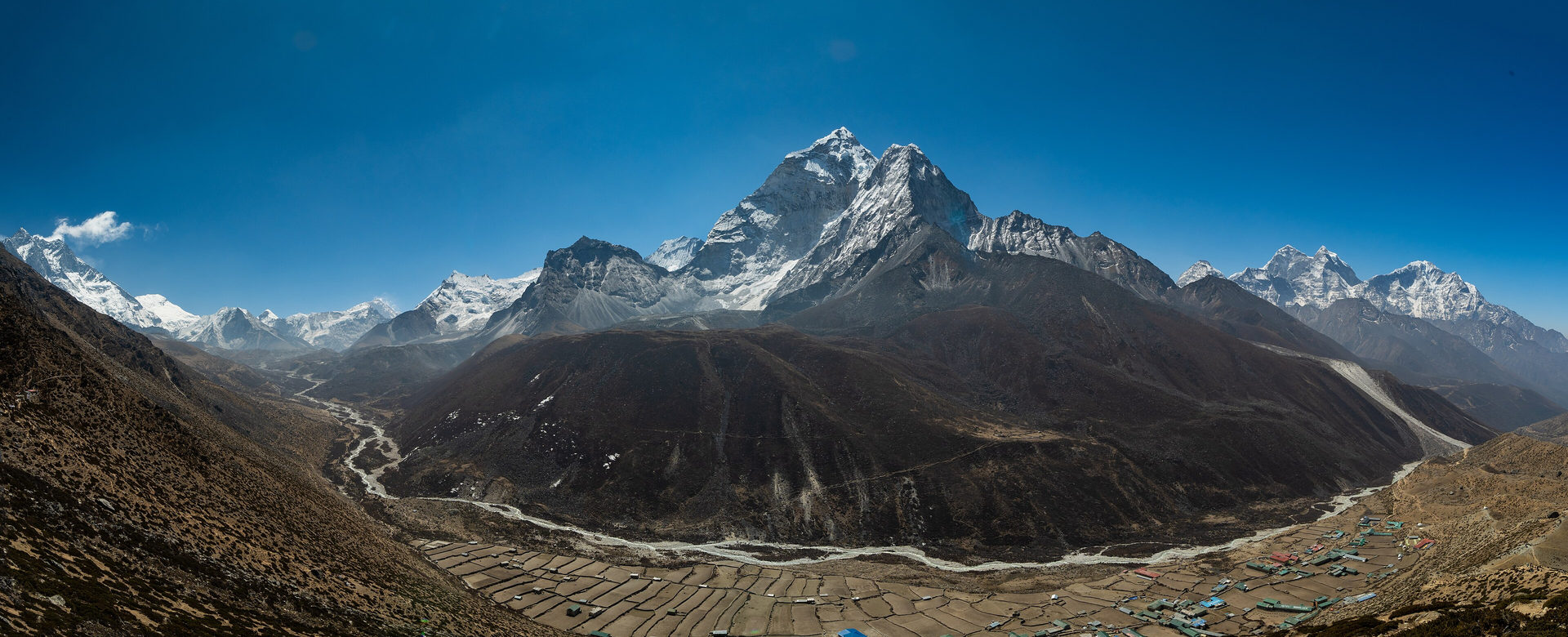
Sixteen days in Nepal, thirteen of them on foot, through the Khumbu to Everest Base Camp and Kala Patthar. One certified Sherpa guide. Six people on the mountain — which means five seats, and a pace that belongs to the light rather than the schedule.
Most people carry this one for years before they walk it. It sits on the list under a different heading than the other trips — not somewhere to go, something to have done.
The Khumbu does not make it easy, and that is the point. You start in a river gorge at 2,844 metres and finish, thirteen days later, standing on moraine at the foot of the highest mountain on earth. In between: suspension bridges over the Dudh Kosi, a monastery at Tengboche where the bells start before the sun, two days given entirely to letting your blood catch up with your altitude, and a stretch above Dukla where the memorials to people who did not come back are set into the ridge like milestones.
Six on the mountain, and one of them is Bret. That number is the trip. Six people move at the pace of the group rather than the pace of the itinerary — which means when the weather opens over Ama Dablam at four in the afternoon, everyone stops.
Two of the days are not walking days at all. The route builds in a full day at Namche and another at Dingboche so your body can catch up with the altitude — and both of them land in good light with nowhere to be. On this trip those are photography days, run by a working photographer, in the best conditions the Khumbu offers all year. Every trek to Base Camp has those two days. Most of them call it rest.
You land on the tenth, which gives you two nights before anything is asked of you. Kathmandu is loud, close, and 1,325 metres above the sea — low enough that the altitude is still somebody else's problem.
The first evening is dinner. All six of us at one table, jet-lagged and mostly quiet, and a drink afterwards for anyone still upright. Nothing else is asked of you on the tenth.
The second day goes to the city. Two UNESCO World Heritage sites with a guide — stupas, prayer wheels, smoke, and more people in one square than you will see for the next two weeks. Bring the camera you are about to carry to Base Camp and learn it here, where a mistake costs nothing. Whatever is still missing comes off a gear-shop shelf in Thamel that afternoon.
Then we cook. Not a restaurant table — a kitchen, the six of us, Nepali food made badly and eaten well. It is the fastest way five strangers and a photographer become a group, and by the time the plates are cleared the trip has already started.
The flight into Lukla is the first thing that tells you where you are. The runway is 527 metres long and tilted uphill, and it ends at a wall. You land, you shoulder a day pack, and you walk out of the village the same morning.
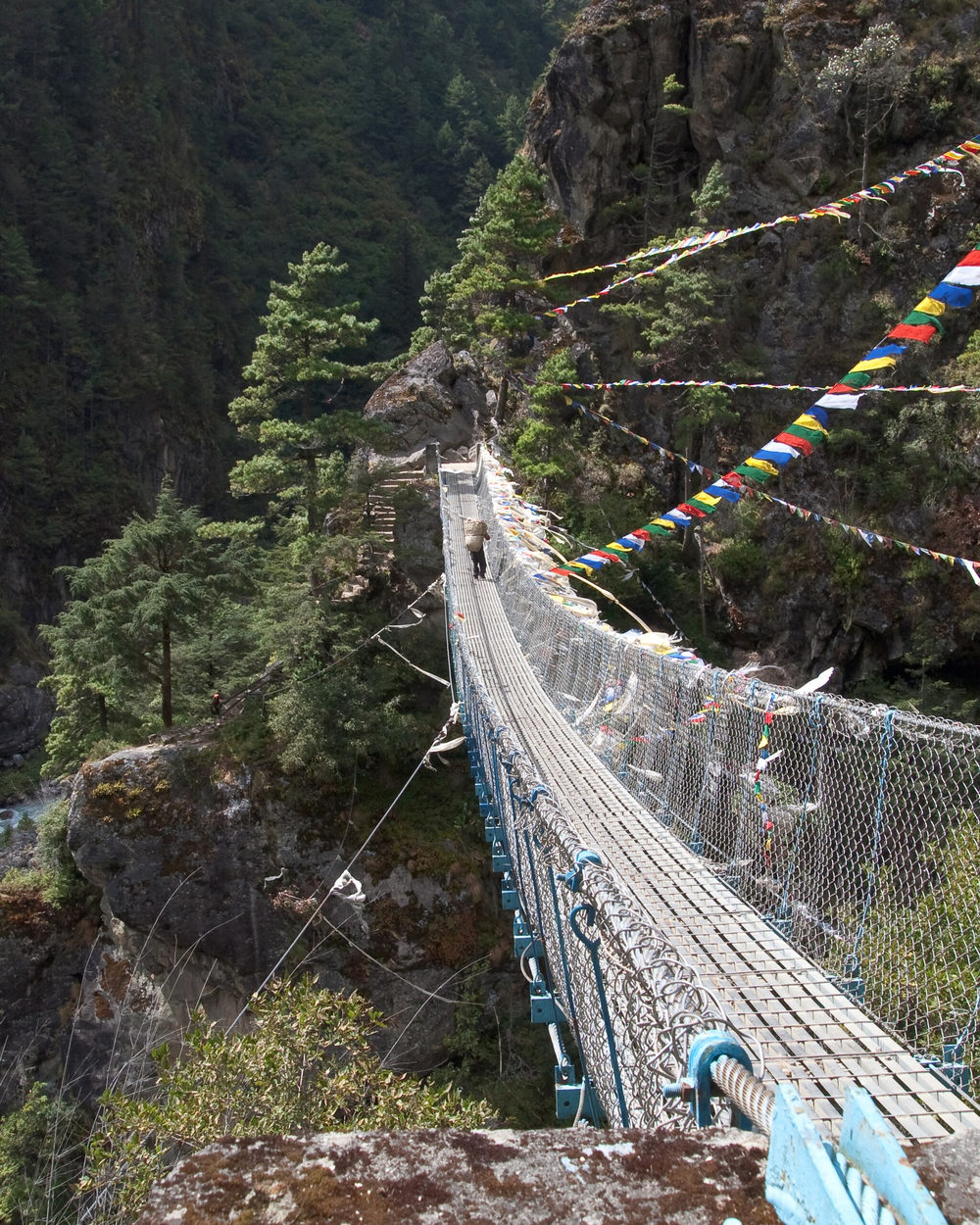
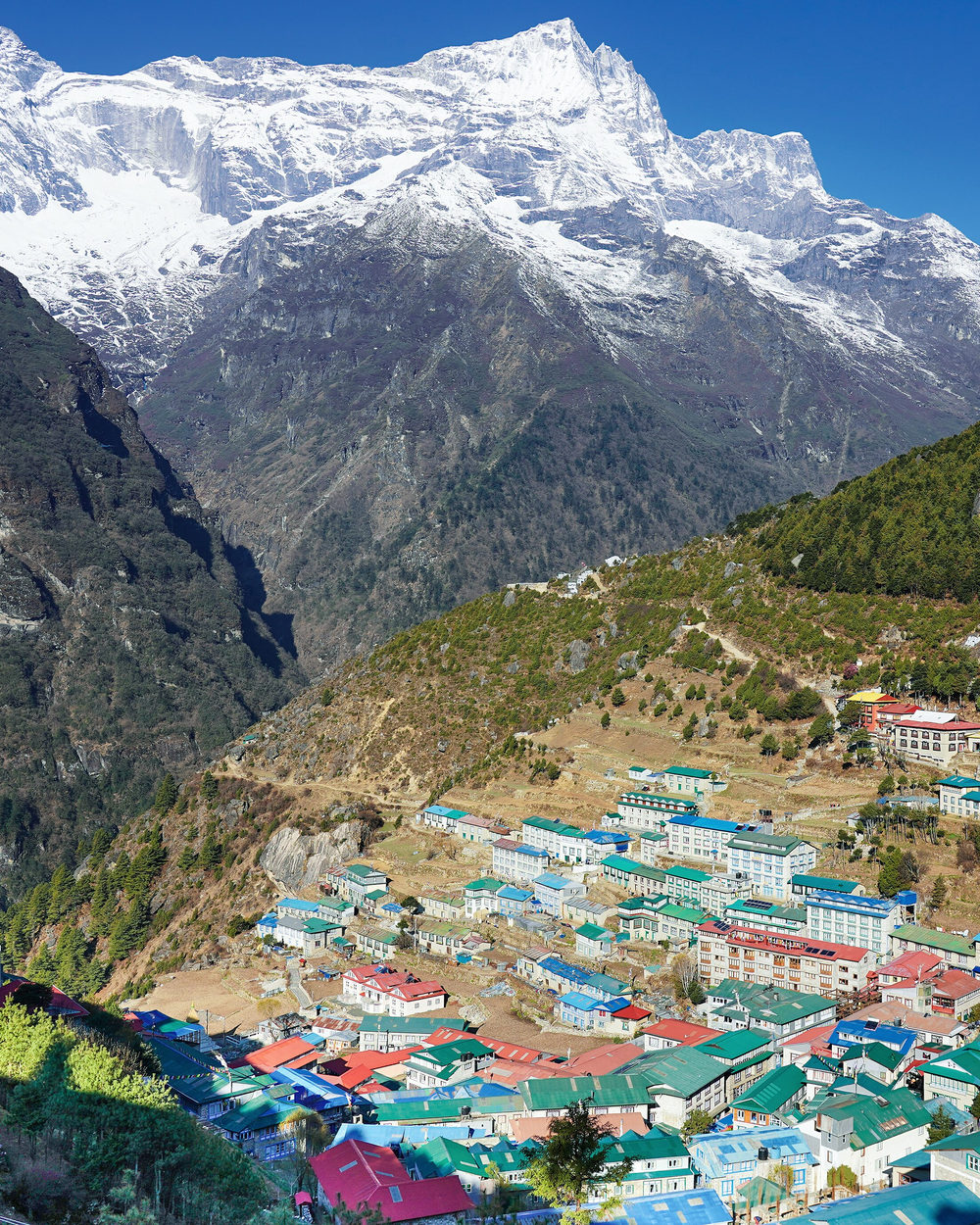
Two days follow the Dudh Kosi upstream through Toctoc and Benkar, across suspension bridges strung with prayer flags — the last and highest of them the Hillary Bridge, which you cross before the climb starts properly. Then Namche Bazar: 800 metres of switchbacks in thin air, ending in a horseshoe of stone buildings that has been the Sherpa capital for three centuries. There is cold beer in Namche. One is a good idea at 3,440 metres. Two is not.
The third day you do not leave, and that day is yours. It is the first of two built into this trek for altitude, and both of them fall in good light with nowhere to be — so we shoot them. Sunrise from the viewpoint above town, the first sight of Everest, the Sherpa museum in the afternoon, sunset back on the ridge. You sleep lower than you climbed.
Above Namche the treeline thins and the valley opens. Tengboche sits on a saddle at 3,849 metres with Ama Dablam directly behind it. We visit the monastery in the morning — it runs a puja that visitors are welcome to sit in on, and it is dark, loud, and not staged for anyone. Then you walk out of the gate and Ama Dablam is simply there, the mountain they call the Matterhorn of the Himalayas, and the morning stops being about walking.
Dingboche gets the second photography day. Same principle as Namche: a full day at altitude, no distance to cover, the best light of the trip arriving twice. Then the walk to Lobuche past the memorial ridge above Dukla — stone cairns and plaques for climbers and Sherpas, some of them famous, most of them not. It is the quietest hour of the trek. Somewhere that afternoon the glacier comes into view for the first time.
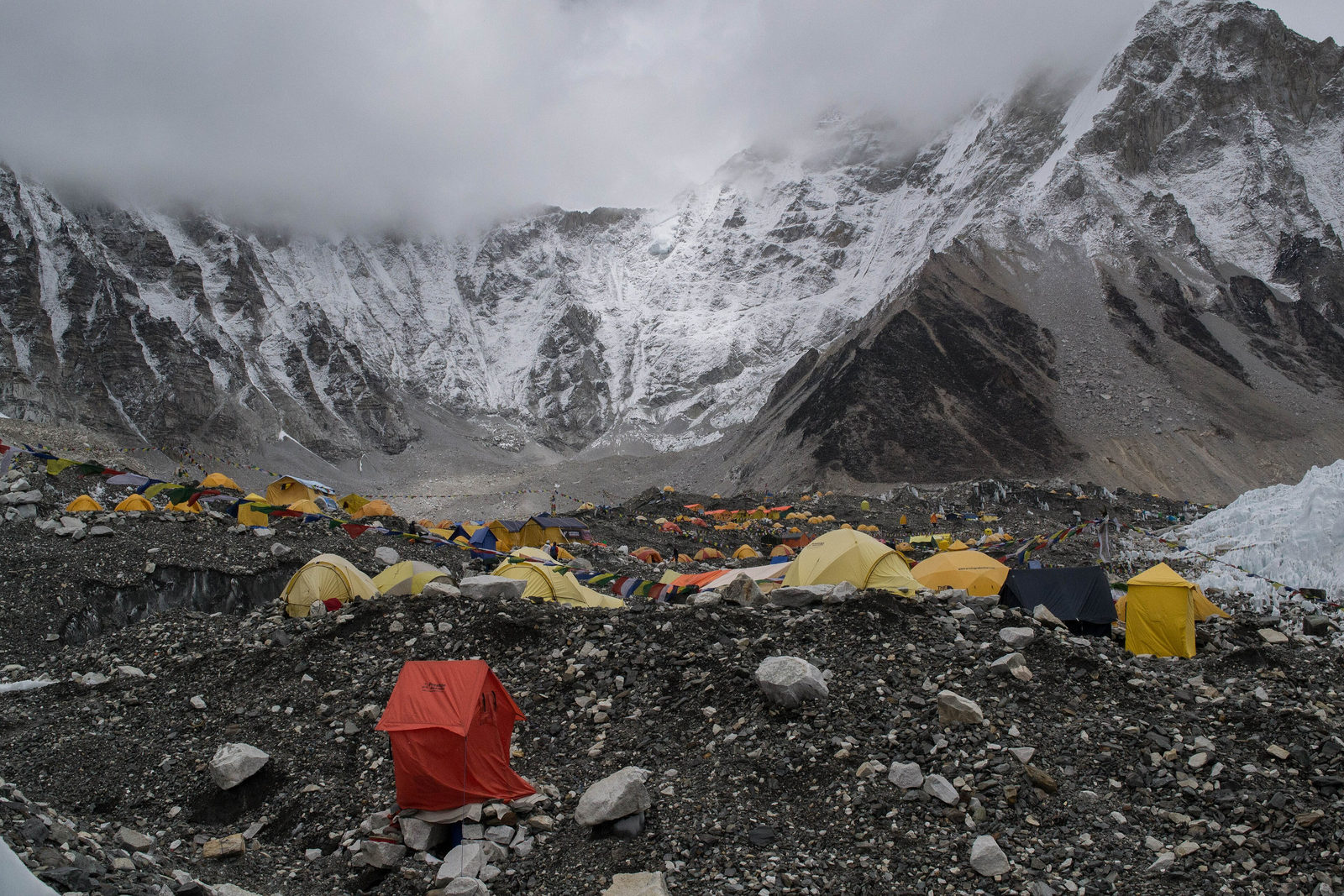
You walk onto the Khumbu Glacier and follow it to Everest Base Camp. In April the camp is alive — a small city of yellow tents on moving ice, the season's expeditions acclimatizing for the icefall above. You stand on the moraine at the bottom of the mountain, and then you walk back to Gorak Shep to sleep at 5,152 metres, which is not restful and is not supposed to be.
The next morning starts in the dark. Kala Patthar is the high point of the trek and the only place on the route where Everest stands clear of Nuptse and shows its full south face. You are on the summit for sunrise. Then you turn around and start down.
Descending is faster and harder on the knees, and the air comes back to you a little more with every hour. Colour returns — juniper, then rhododendron, then the first real trees since Namche. Ama Dablam reappears on the way down from an angle you have not seen it from, which is worth having the camera out for one more time. Lunch and a beer in Namche. By Monjo the celebrating has started, and there is still a day of walking left.
The last trail night is in Lukla, where it started. In the morning you fly back to Kathmandu at 1,325 metres and the oxygen feels like something you are getting away with.
That final night in the city is deliberate. Lukla’s airstrip closes for weather more often than anyone likes, and a same-day connection home is how people miss flights. So you get a night — a massage, a shower that stays hot, a meal you did not have to walk to, and time to sit still before the long flight.
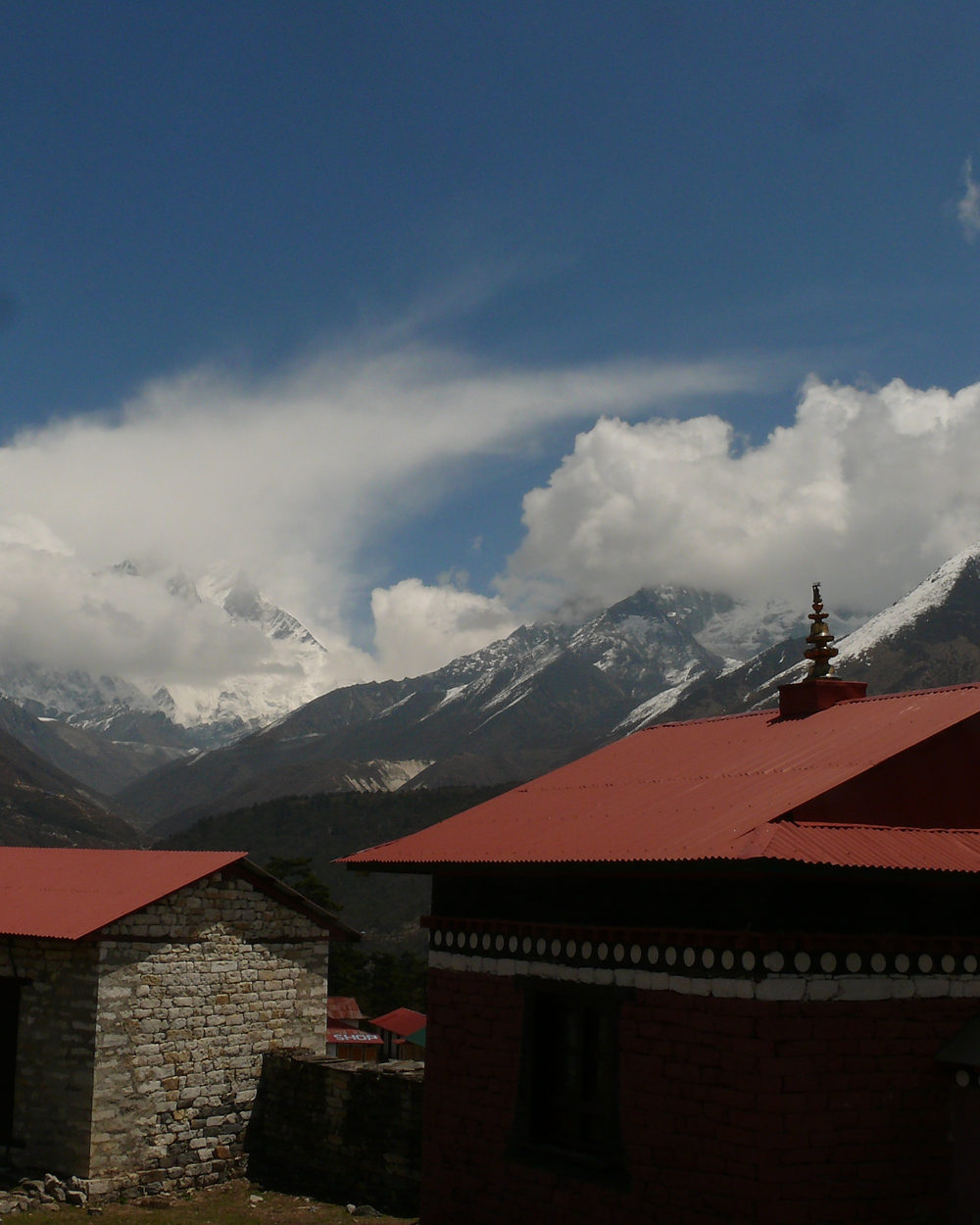
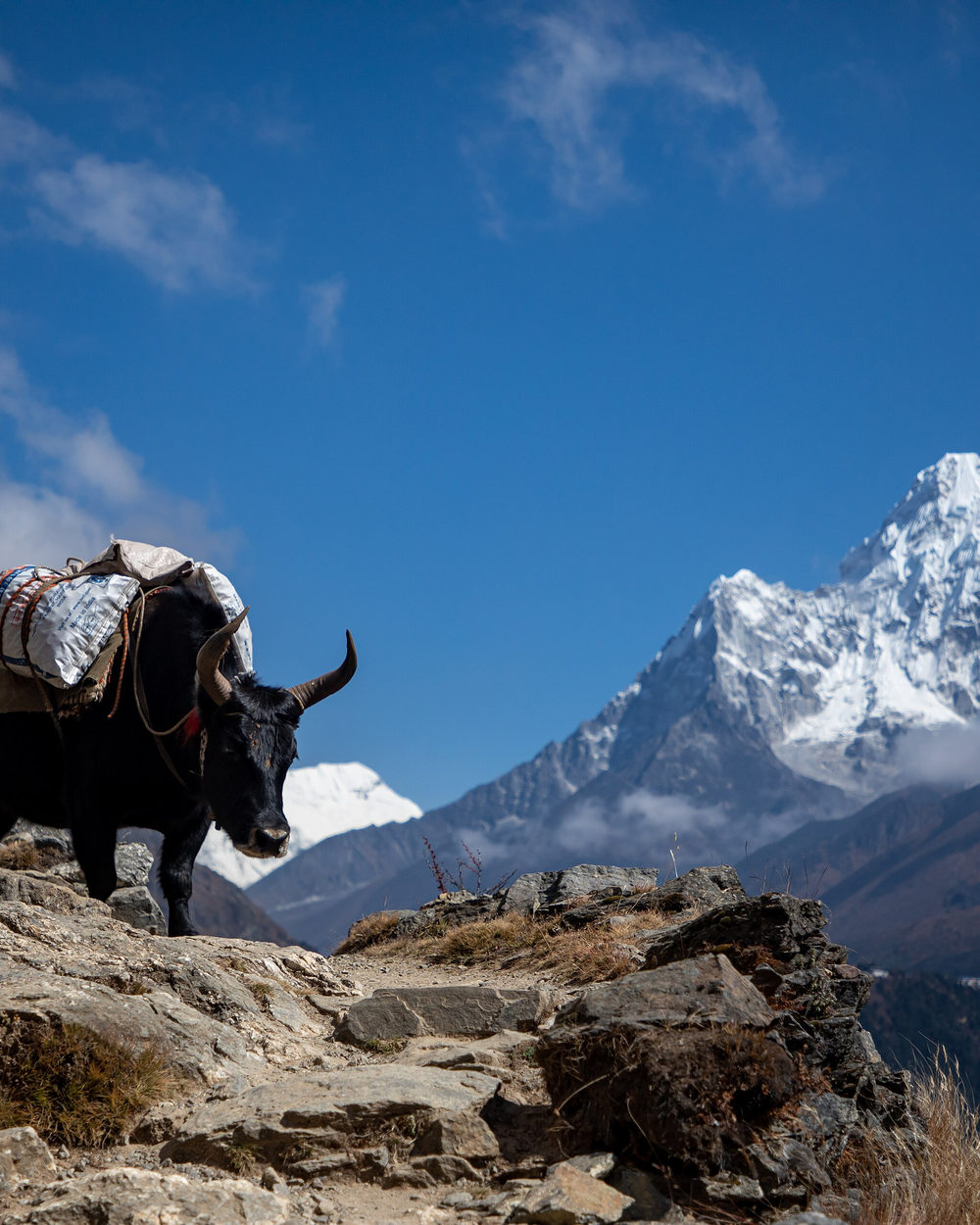
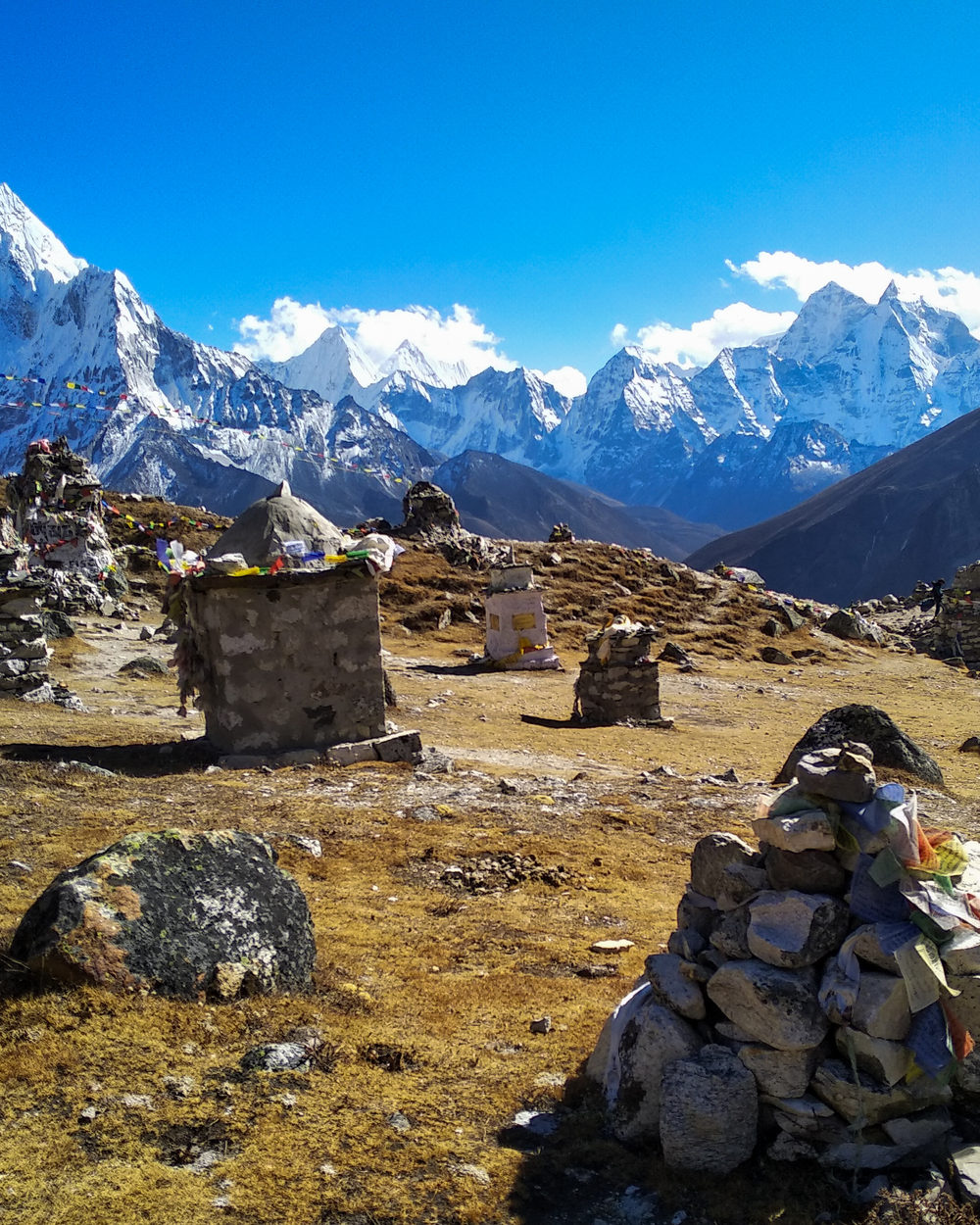
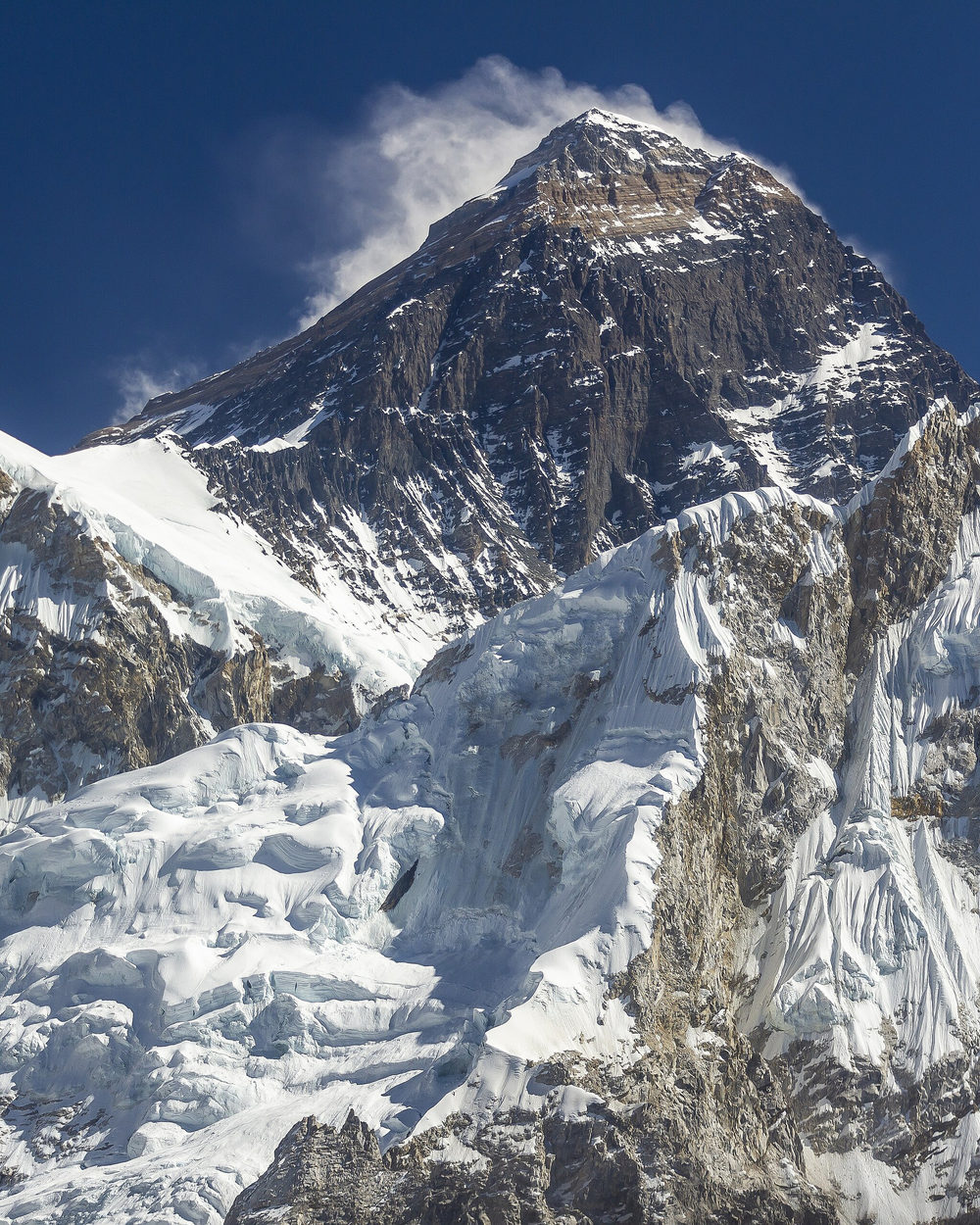
Photographs by Vyacheslav Argenberg, Nirojsedhai, Goutam1962, Sangyam Adventurer, Rohit Sharma and Bijay Chaurasia, used under CC BY 4.0 and CC BY-SA 4.0. These are not the founder's frames. Bret has not stood at Base Camp — the Khumbu here is shown by the people who have.
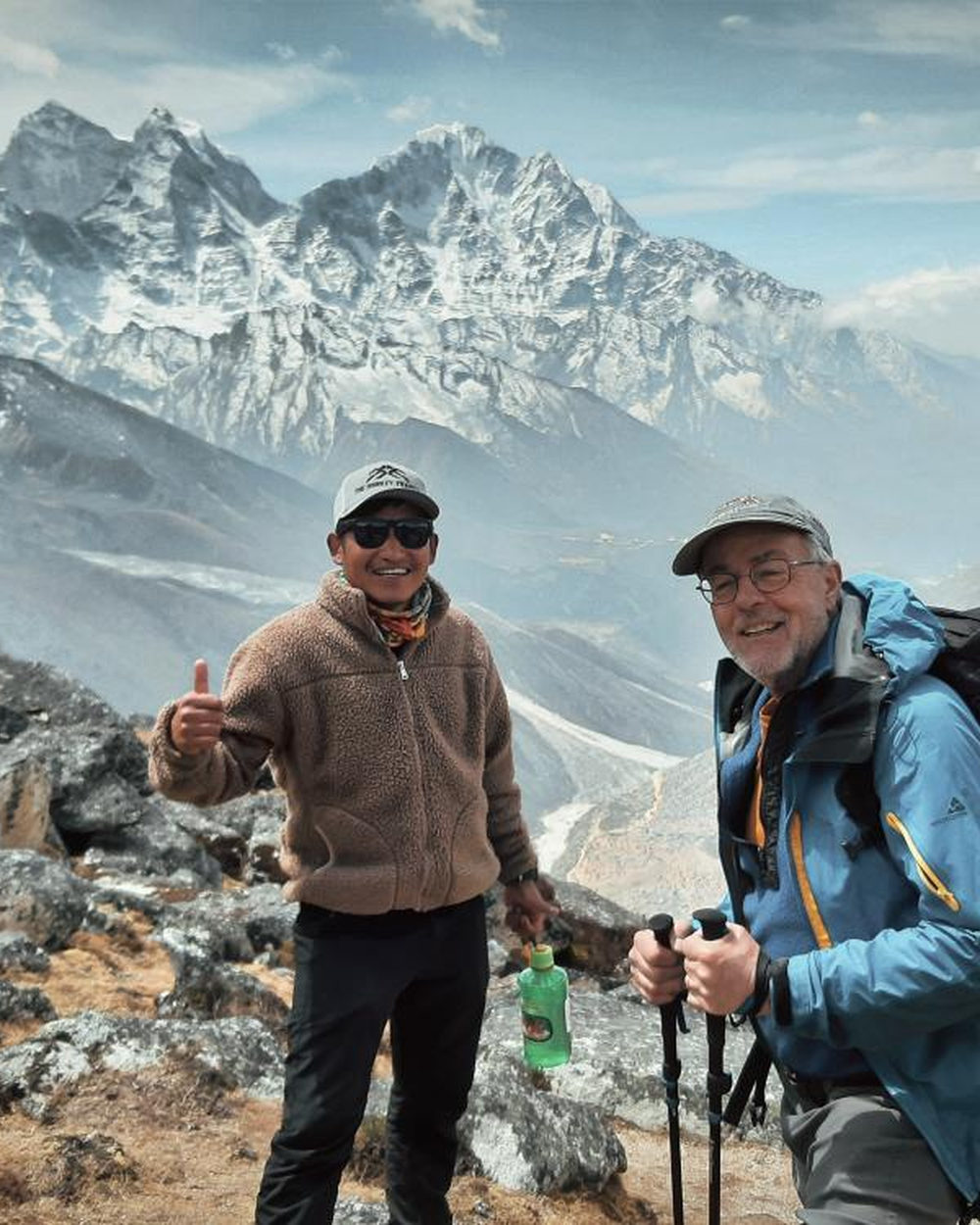
Sonam has taken a hundred and fifty groups up this valley. He knows which lodges have the good stove, which mornings the cloud burns off Ama Dablam, and — the part that actually matters — when someone in the group needs to stop climbing for the day. On a route where the real risk is altitude rather than terrain, that judgment is the whole product.
He runs the mountain. That is not a formality.
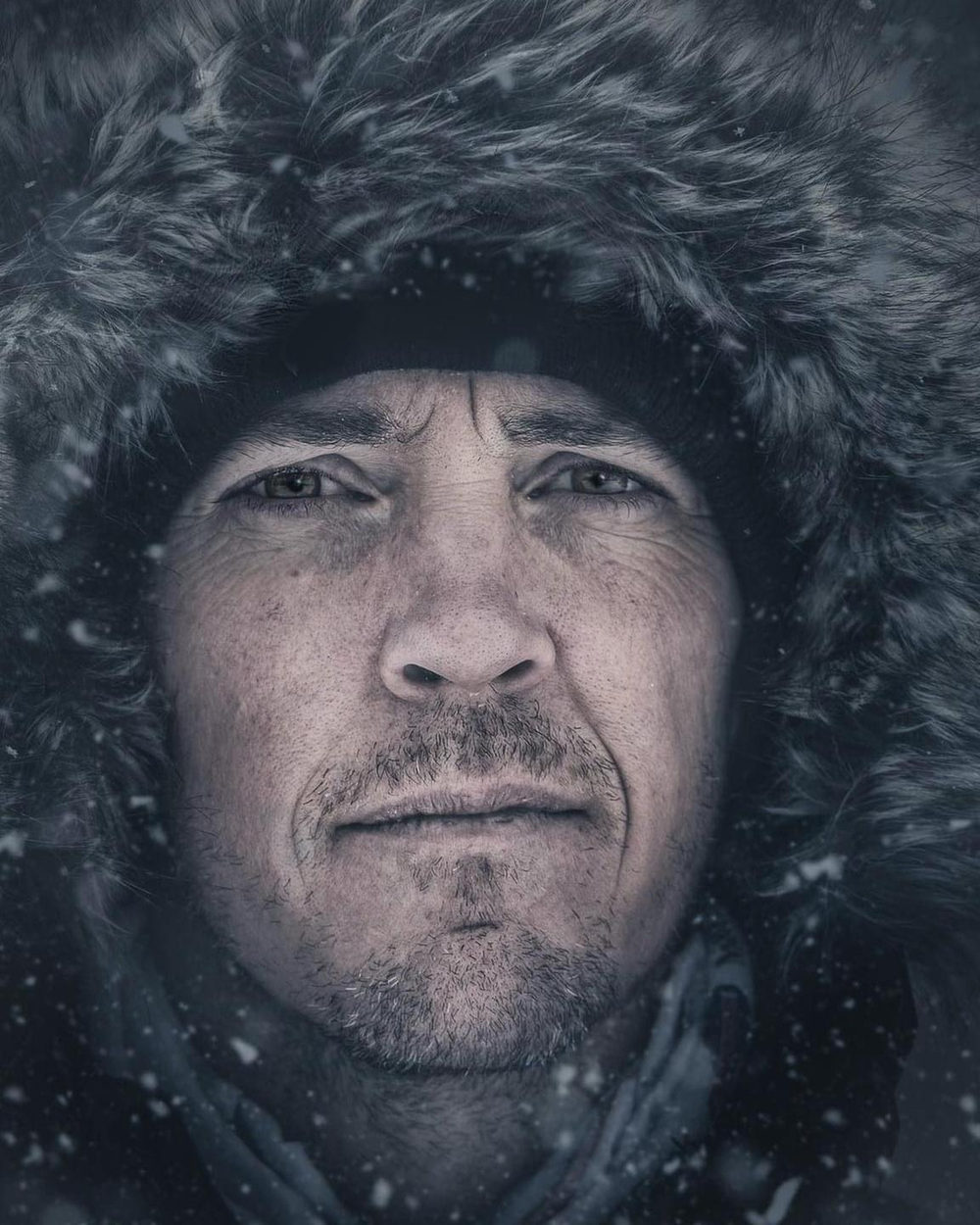
Bret built Seek The Epic around waking earlier than the trip requires. He walks this one as the sixth member of the group, not as its guide — documenting it the way he documents everything, and taking Sonam's call on the mountain like everyone else.
A private edited gallery of your own frames from the route, delivered after the trip.
A short cinematic cut of the expedition — the group, the valley, the morning on Kala Patthar.
You will have slept at 5,152 metres and stood at the bottom of Everest. That one is not deliverable.
A photography trek in Nepal generally runs eight to fourteen people for ten to fourteen days, and most of them do not go to Base Camp. Here is the same trip, measured the same way.
Comparison range drawn from published 2027 and 2028 pricing for photography-led treks in Nepal, verified August 2026. Standard guided Everest Base Camp treks without photography instruction run $4,000–$6,000 through international operators. Prices move; these were accurate when written.
Fourteen people at a viewpoint is a queue. Five is a group that can wait twenty minutes for the cloud to move, because everyone wants the same thing and nobody is holding up a bus.
I have not stood at Base Camp yet. This is the first Seek The Epic trip I am walking as a participant.
That is deliberate. The Khumbu belongs to the people who live and work in it, and the person who should be reading the mountain for six of us is Sonam, not me. What I bring is the thing I always bring — the discipline of being out before the light, and a camera that does not stop when the weather turns.
Five seats, and I am taking the sixth. April 2027. If this one has been sitting on your list for years, this is the version of it I would want to walk.